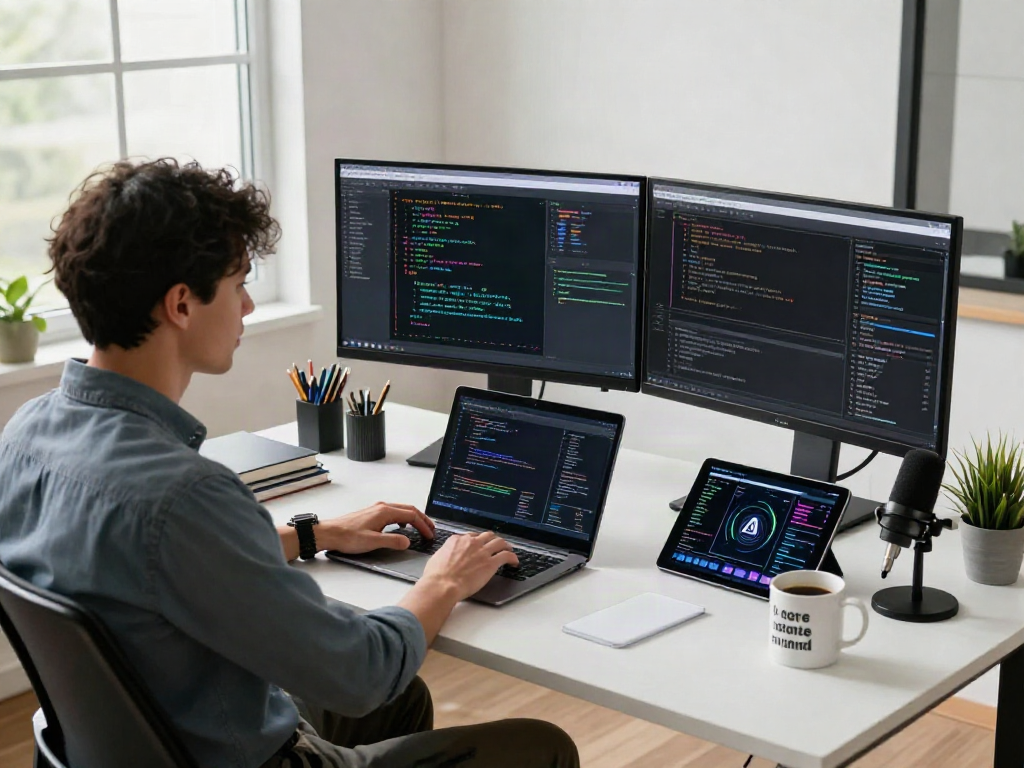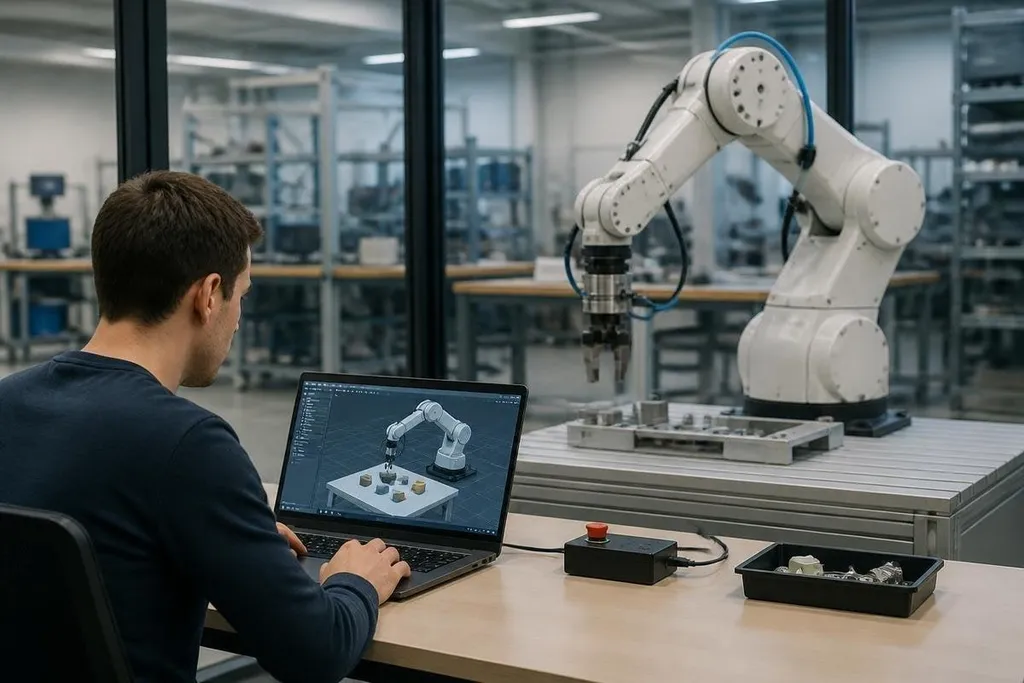
A robot can repeat the same move thousands of times in a simulator before a person lets it near a real workbench. AI changes robot training by helping machines learn from examples, feedback, and sensor data instead of relying only on hand-written commands.
- Simulation lets a robot practise without breaking hardware
- Camera and force data help it adjust to real objects
- Human checks still decide when a trained skill is safe to use
From fixed commands to learned skills
Traditional robot programs tell each joint what to do at a set point. That works well for repeatable work, such as moving the same part between two fixed positions. A small change in the part, lighting, or tool can make the program fail.
AI training uses a model to connect what the robot senses with the action it should take. A camera may identify an object, while joint sensors report the arm’s position and force sensors show contact. The model then chooses a movement from the information available at that moment.
This approach suits tasks with many small changes. A gripper can learn where to close on a box after seeing boxes from different angles, for example. The skill still needs limits, since a model can select a poor action when the object or setting falls outside its training data.
Simulation cuts the cost of practice
Physical training takes time, power, staff, and replacement parts. Simulation gives the robot a virtual work area where it can repeat a task, test a new motion, and record the result without wearing out a motor.
The simulator can vary object position, surface color, lighting, and friction. Those changes give the model more cases to study, which can help when the real work area differs from the original setup.
The gap between a virtual task and a real task remains a problem, since virtual sensors and contact forces rarely match hardware perfectly. Teams often move in stages: test a motion in software, run it at low speed on the robot, then increase speed after checks. That order keeps a bad model from turning a software mistake into a damaged arm or dropped load.
Learning from people and failure
A person can guide training in two common ways. They can show the robot a task through teleoperation, or they can label what the robot sees and mark which actions worked. The robot uses those examples to learn a link between a situation and a response.
Failure data matters too. A dropped object, a stalled motor, or a missed grasp tells the training system where its choice failed. The next training run can give that case more weight, though the change needs a test that checks whether the robot also became worse at other tasks.
This is where human review stays necessary. A high success rate in a test set doesn't prove that a robot can work safely beside people, handle unusual objects, or stop in time when a sensor gives bad data.
Why the training method matters to industry
AI training can shorten the work needed to teach a robot a new task, but the result depends on the data, simulator, sensors, and safety rules. A company that changes its gripper or camera may need to collect new examples before the old model works well again.
Training claims need a record of the data, simulator, and hardware used. Robot24.com’s reporting on robot training can tie those details to the robot’s task and test results before you price the work.
The price of training also moves beyond the robot itself. Teams need computing hardware, data storage, simulation software, test fixtures, and staff who can inspect failures. A cheaper robot may still cost more to run if each new task needs weeks of manual setup.
I’d trust a training claim only after seeing the task, the test conditions, and the failure rate outside the training set.
A practical check before you buy or build
Use these questions when a supplier presents an AI-trained robot:
- Ask which task the model learned and where it has run.
- Check how many objects, positions, and lighting conditions appear in testing.
- Request a live run with an object the robot has not seen before.
- Find out what happens when a camera, force sensor, or network link fails.
- Confirm who approves model changes before the robot returns to work.
- Price the computers, data work, maintenance, and staff beside the robot.
The next useful measure won't be how much data a system processed. It will be whether the robot can learn one new task, pass a clear safety test, and keep working when the parts and surroundings change.